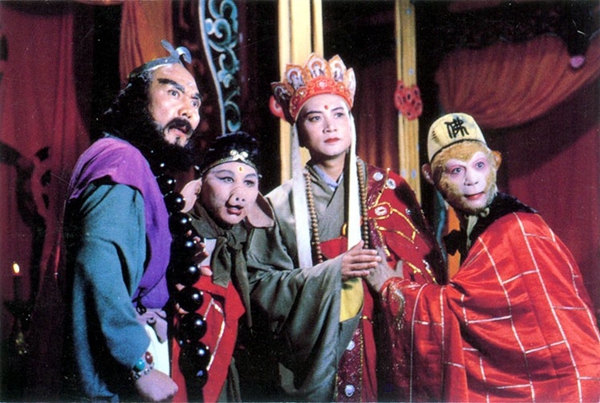
Journey to the West (TV Drama)
Introduction
Journey to the West is a renowned Chinese television series that first premiered on October 1, 1986, on China Central Television (CCTV). Directed by the acclaimed filmmaker Yang Jie, the series is a faithful adaptation of the classic Chinese novel of the same name. The narrative centers around the legendary pilgrimage of the Tang Dynasty Buddhist monk, Xuanzang, and his three disciples: Sun Wukong, the Monkey King; Zhu Bajie, the Pigsy; and Sha Wujing, the Sandy Monk. Their journey to the Western Regions, which refers to Central Asia and India, is fraught with trials and obstacles as they seek to retrieve sacred Buddhist texts.
The television series stands out not only as a representation of rich Chinese culture and spirituality but also as a milestone in the history of Chinese television. It utilized a single camera setup, typical of that era, to create a production that captured the imagination of generations and is still celebrated as one of the most authentic renditions of the novel. The show's cultural and historical significance is evident in its widespread reception and the deep connection it fosters between viewers and Chinese heritage.
Plot
The plot of Journey to the West revolves around the epic adventure of the Tang Dynasty monk Xuanzang, who embarks on a pilgrimage to the West to obtain sacred Buddhist scriptures. Accompanied by his three disciples, each with unique powers and personalities, they face numerous challenges and battles against mythical creatures and devious spirits. Sun Wukong, the Monkey King, is known for his immense strength and magical abilities, which he often uses to protect his master. Zhu Bajie, once a heavenly general, possesses great appetite and strength, while Sha Wujing, the quiet and dependable disciple, provides steadfast support throughout the journey.
Their quest is not merely physical; it is also a journey of self-discovery and spiritual enlightenment. As they traverse through deserts, mountains, and enchanted lands, each character confronts personal weaknesses and learns valuable lessons about wisdom, virtue, and perseverance. The series captures the essence of the original novel by intertwining humor, drama, and fantastical elements, creating an engaging narrative that resonates with audiences of all ages.
Production
Under the direction of Yang Jie, Journey to the West was produced with a vision of bringing the cherished Chinese legend to life on screen. Despite the technological limitations of the 1980s, the production team employed innovative techniques to create the series’ fantastical world. The use of practical effects, elaborate costumes, and carefully crafted sets brought a sense of authenticity and grandeur to the narrative. Filming often took place in various scenic locations across China, enhancing the visual richness and diversity of the series.
Yang Jie's leadership was pivotal in guiding the cast and crew through the challenges of producing such an ambitious project. Her dedication to capturing the spirit of the novel ensured that every scene was crafted with precision and care. The production's commitment to quality and authenticity contributed significantly to the series' acclaim and its enduring legacy in Chinese television history.
Broadcast and Reception
Upon its initial broadcast on CCTV, Journey to the West quickly became a cultural phenomenon. Its captivating storytelling and faithful adaptation of the beloved novel resonated with audiences across China, earning widespread acclaim and establishing itself as an iconic piece of television history. The show's success was not confined to its home country; it garnered an international audience and was subsequently broadcast in various regions, including Nepal. The series' translation and dubbing into the Nepali language facilitated its accessibility and popularity among Nepali viewers, further extending its cultural impact.
In Nepal, the series was aired multiple times, reflecting its continued appeal and positive reception. According to reports, nearly 1 million viewers watched Journey to the West on the Nepal Mandal channel, highlighting its enduring popularity. The series' ability to transcend cultural and linguistic barriers attests to its universal themes and the power of storytelling.
Cultural Impact
Journey to the West has had a profound cultural impact, both within China and internationally. It serves as a vital cultural exchange medium, introducing audiences to Chinese traditions, art, and philosophy. The series has played a significant role in promoting cultural understanding and appreciation between China and other countries, where it has become a beloved part of the cultural landscape.
The portrayal of Xuanzang's journey and the virtues embodied by his disciples offer valuable insights into Buddhist philosophy and Chinese cultural values. The series has influenced numerous adaptations and creative works, inspiring filmmakers, writers, and artists worldwide. Its legacy is evident in the continued interest and enthusiasm for new interpretations and reimaginations of its timeless story.
Adaptations and Related Works
The success of Journey to the West has led to numerous adaptations and related works across various media. These include animated series, films, stage productions, and other television adaptations that draw inspiration from the original narrative and characters. Each adaptation brings its own unique interpretation and creative perspective, further expanding the story's reach and influence.
Among the notable adaptations are feature films that explore different aspects of the journey, often incorporating modern technology and visual effects to bring the fantastical elements to life. Animated versions have also gained popularity, particularly among younger audiences, offering a fresh take on the classic tale. The enduring appeal of Journey to the West ensures that it remains a rich source of inspiration for artists and storytellers, contributing to the ongoing evolution of its narrative in popular culture.








